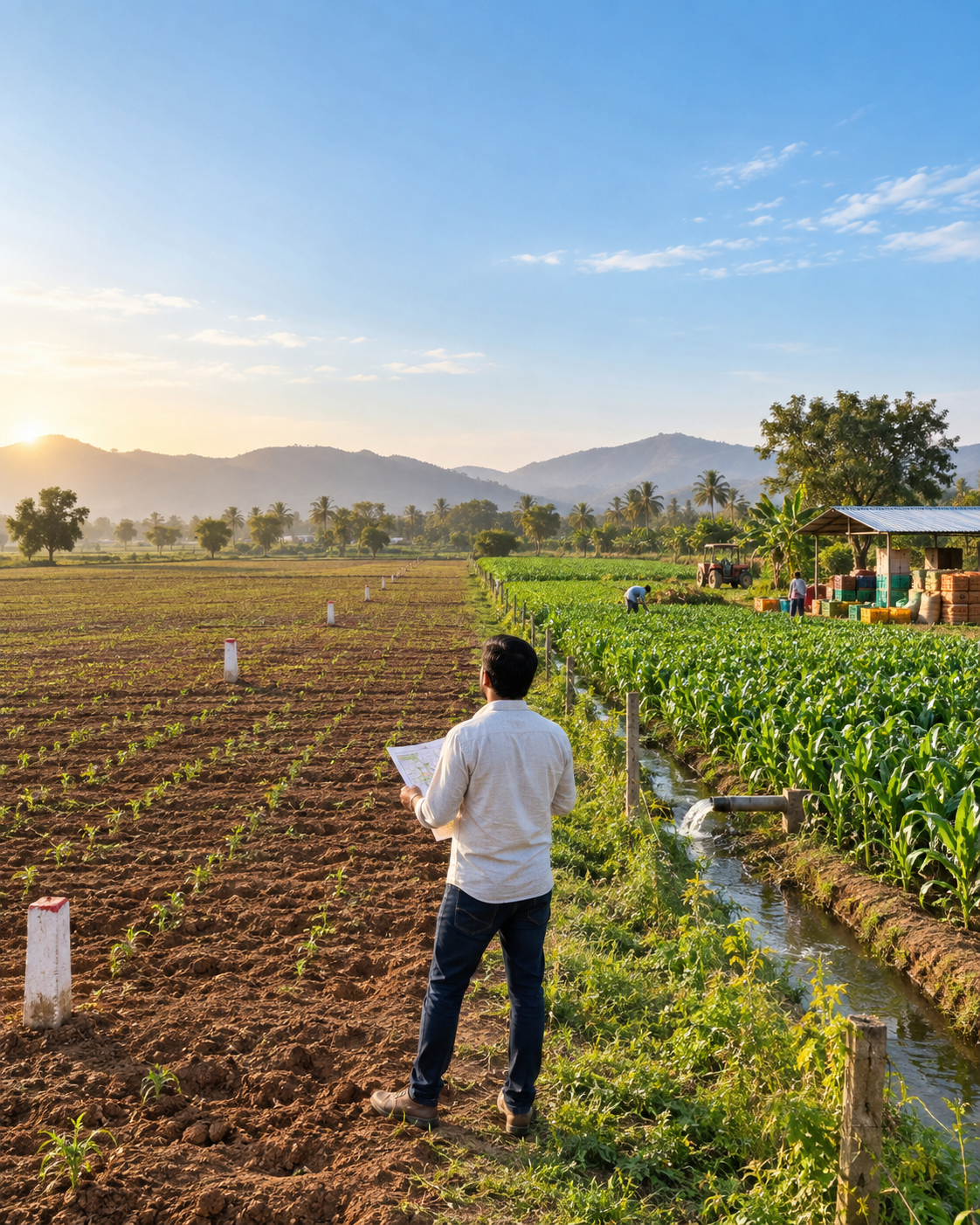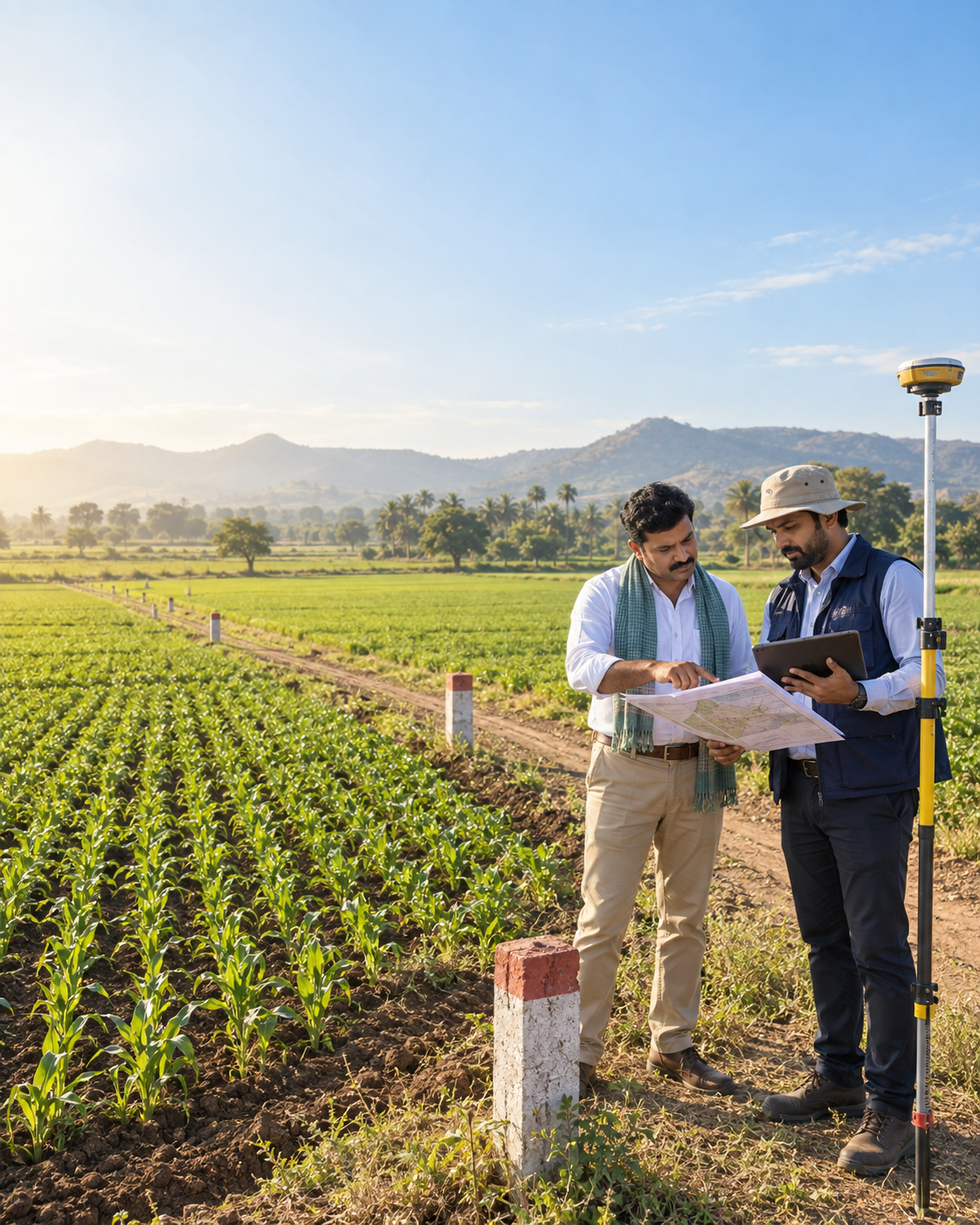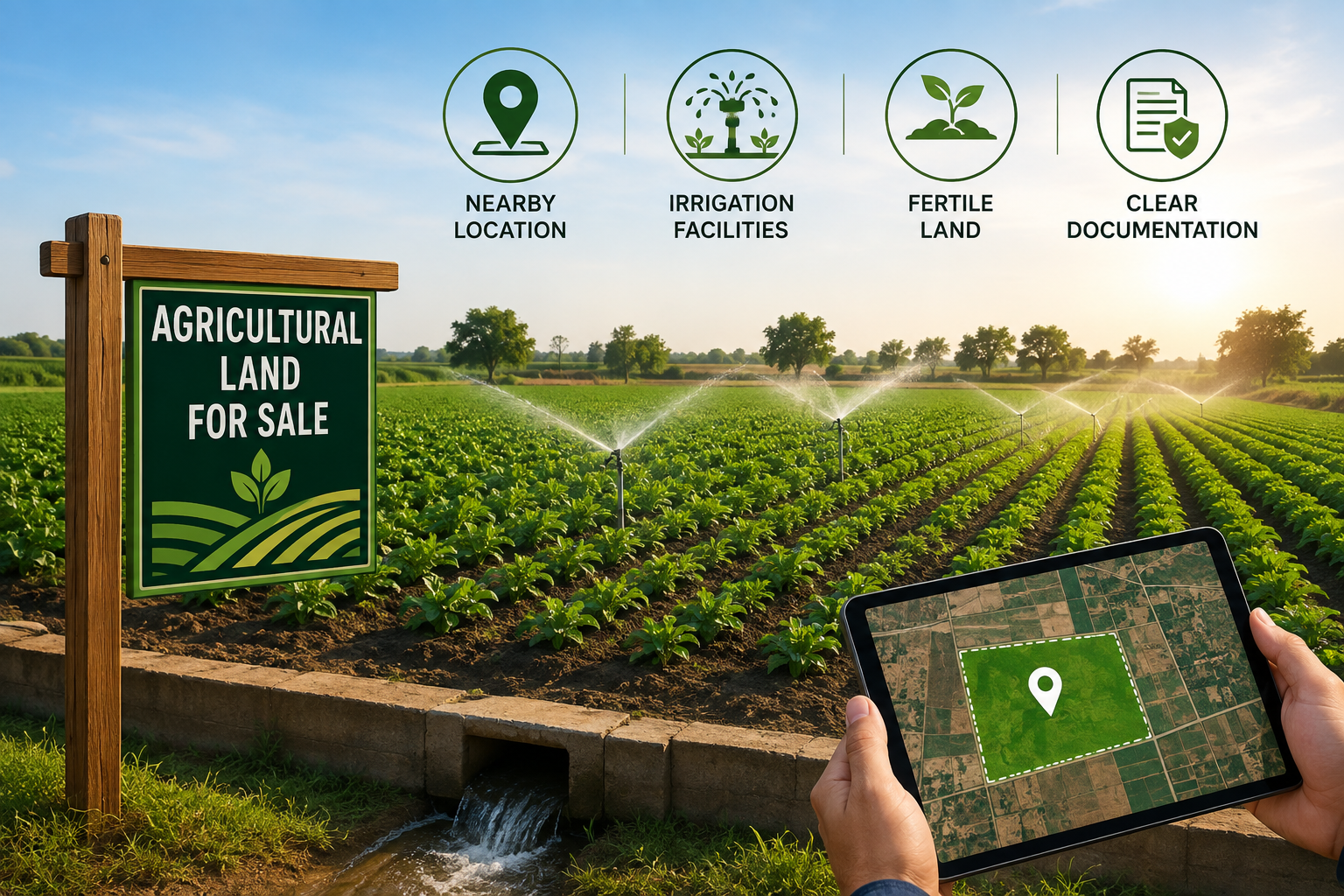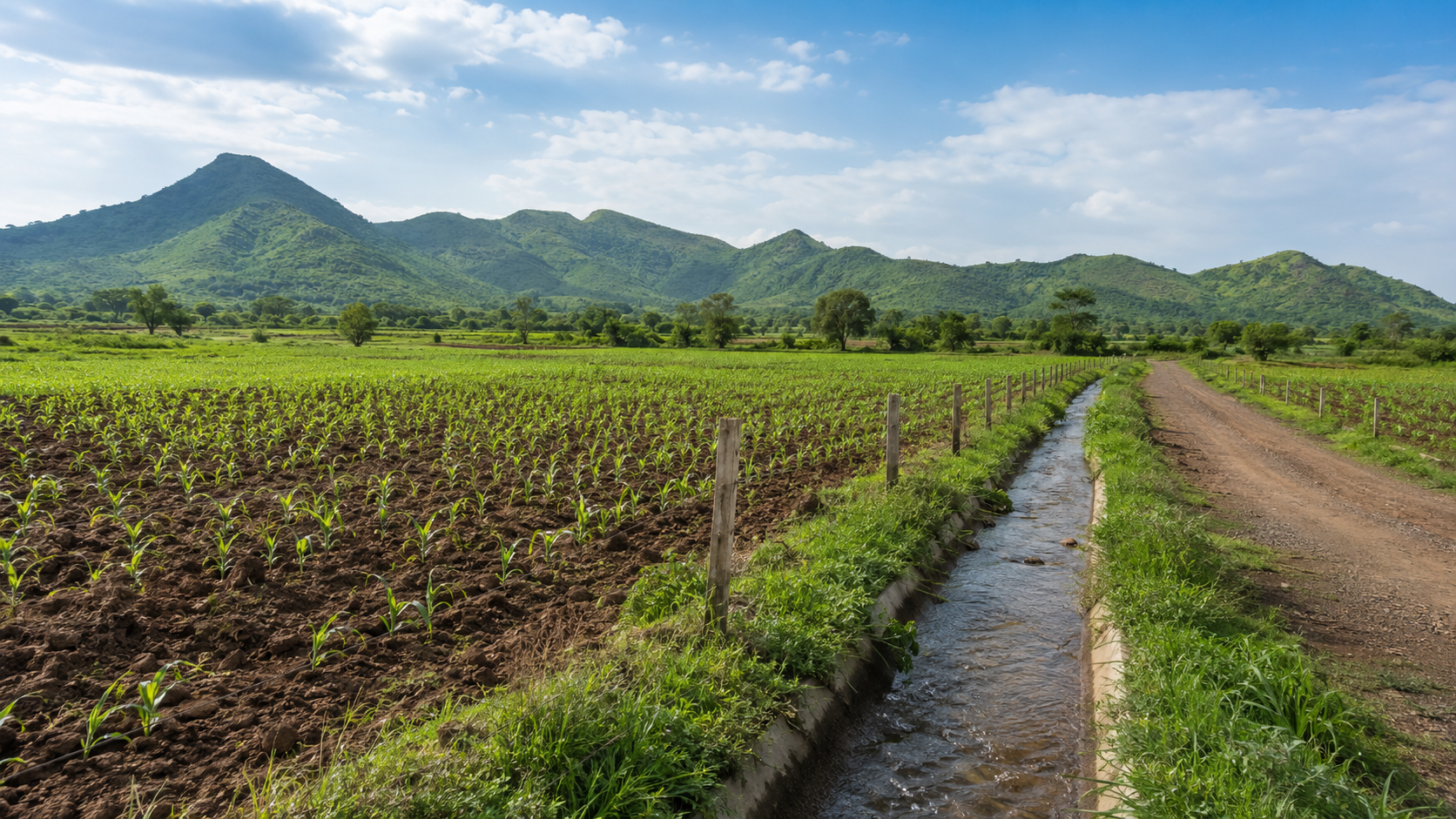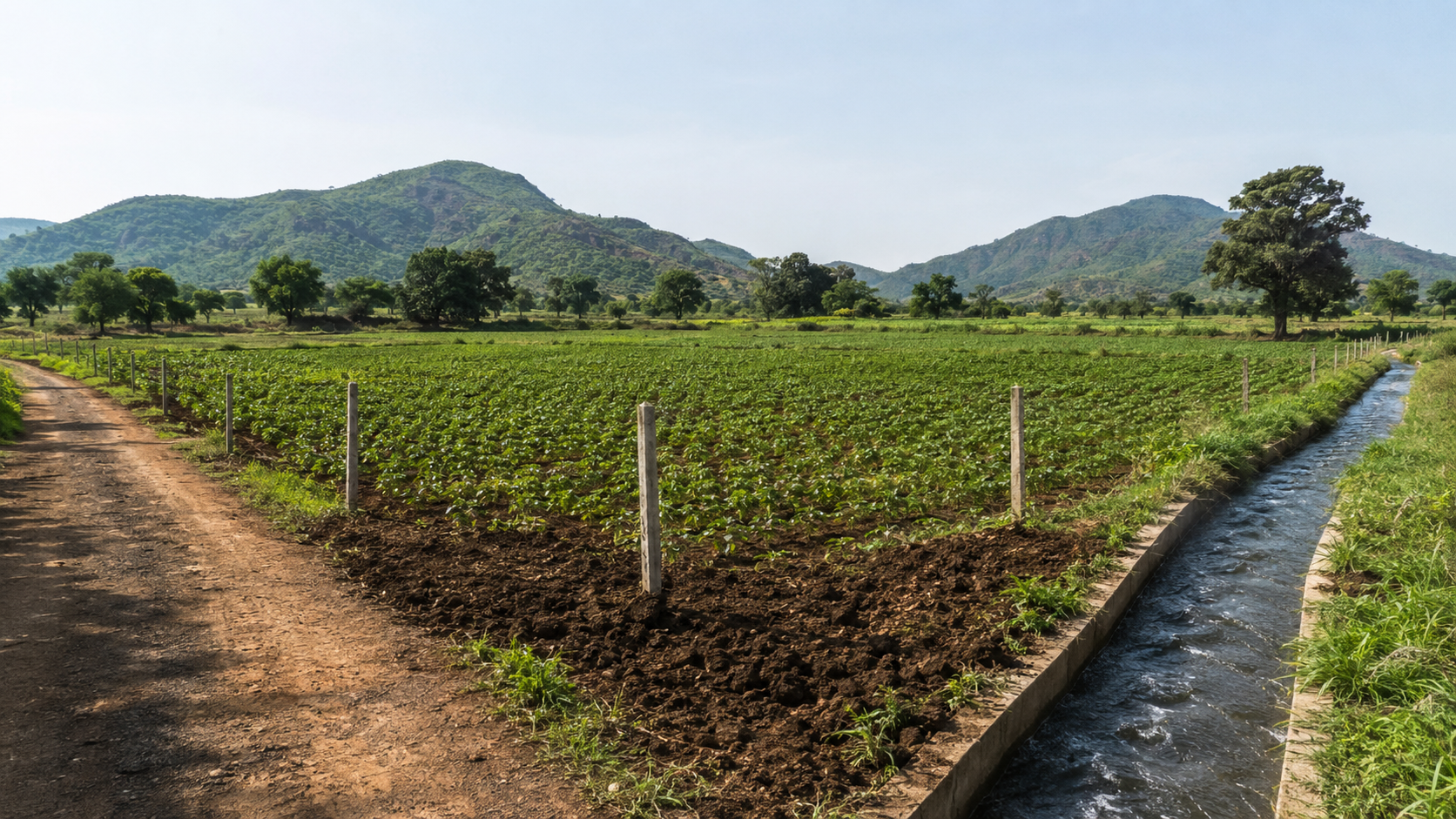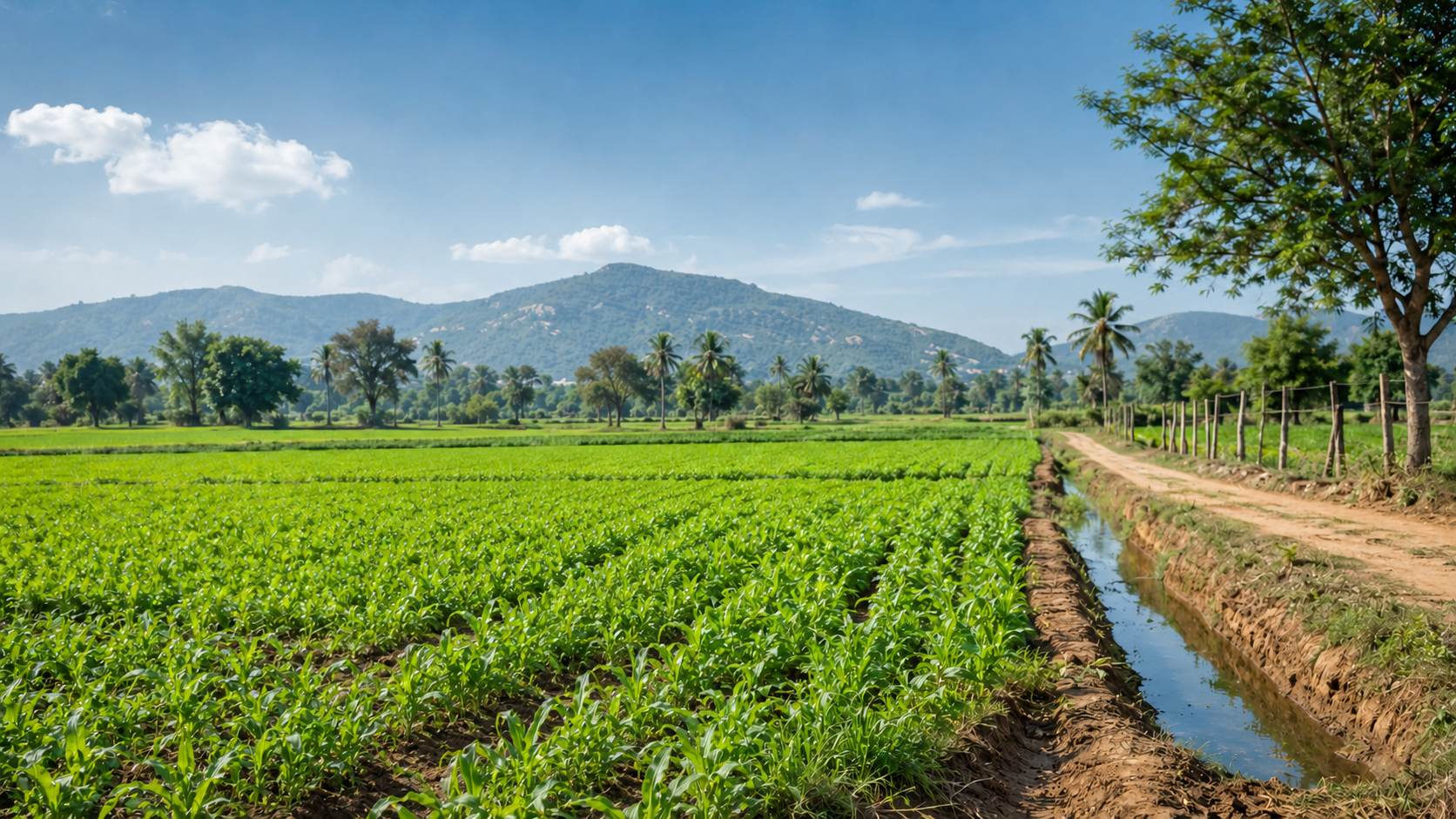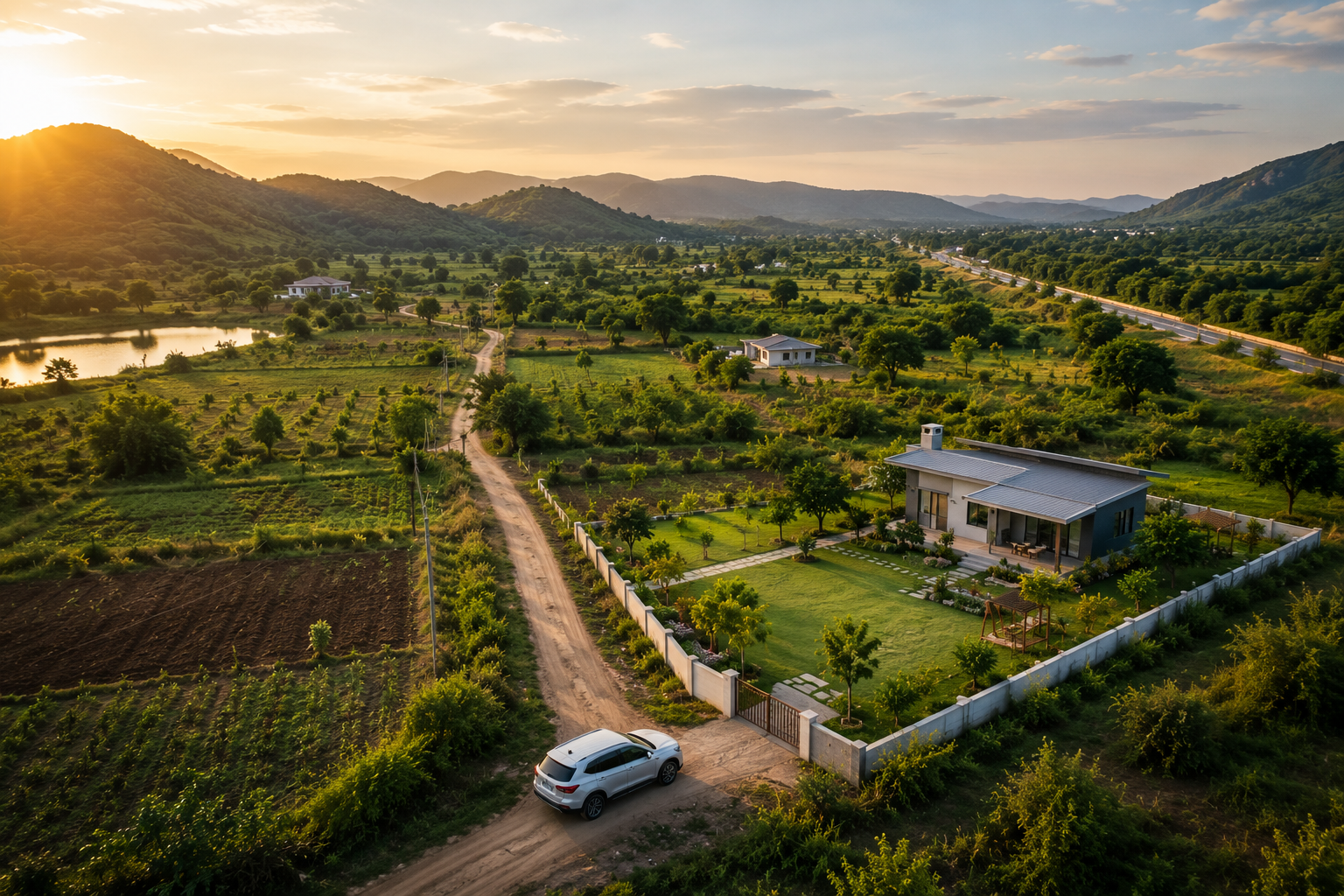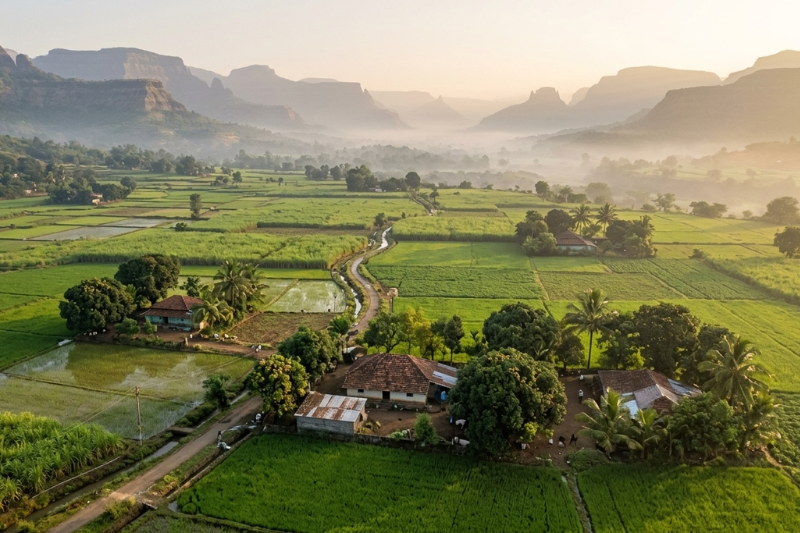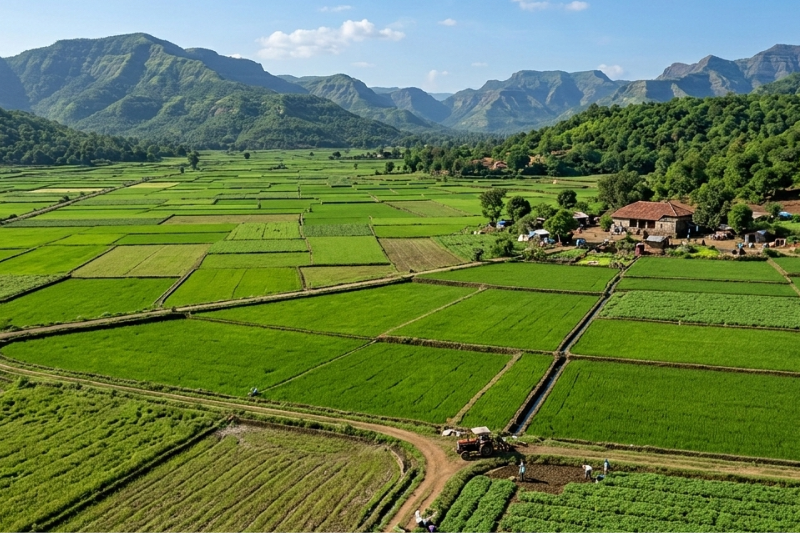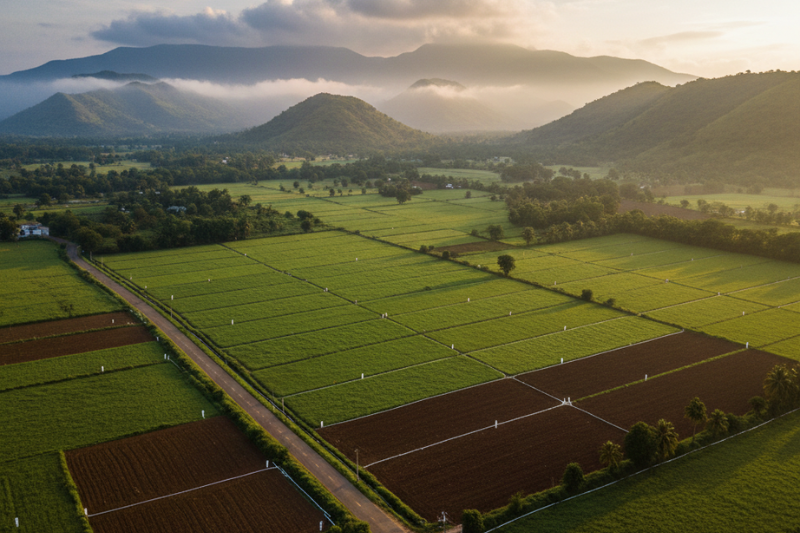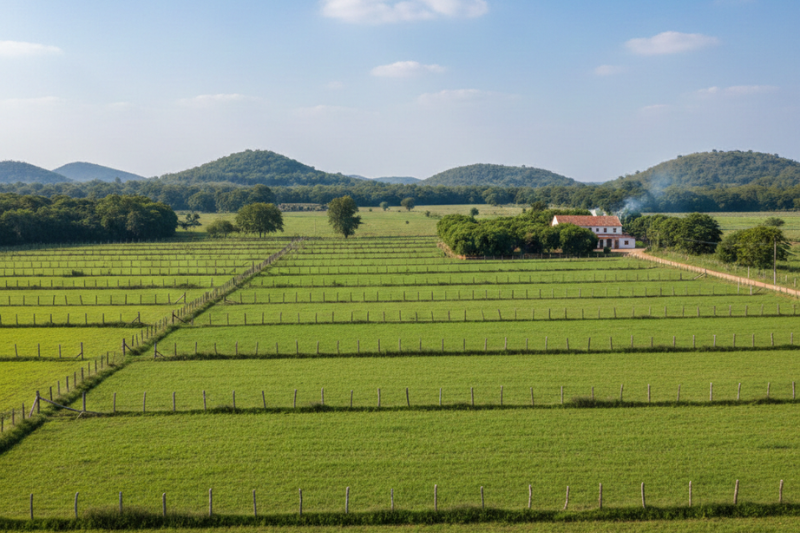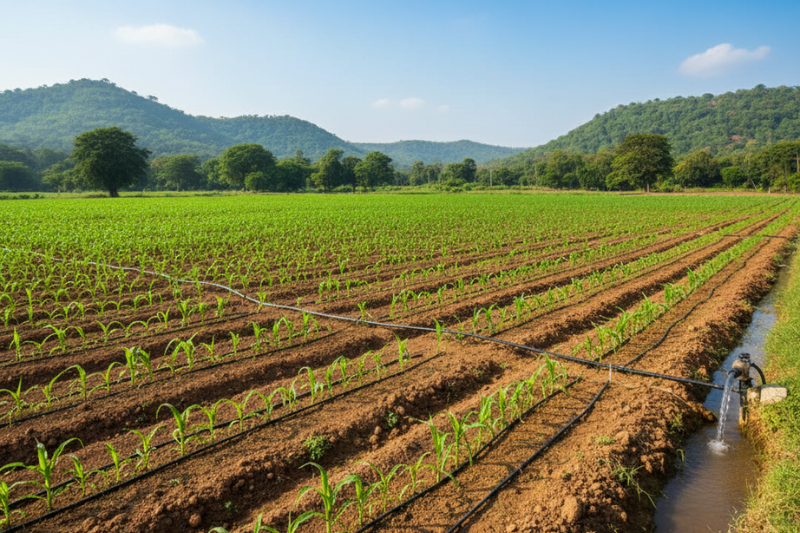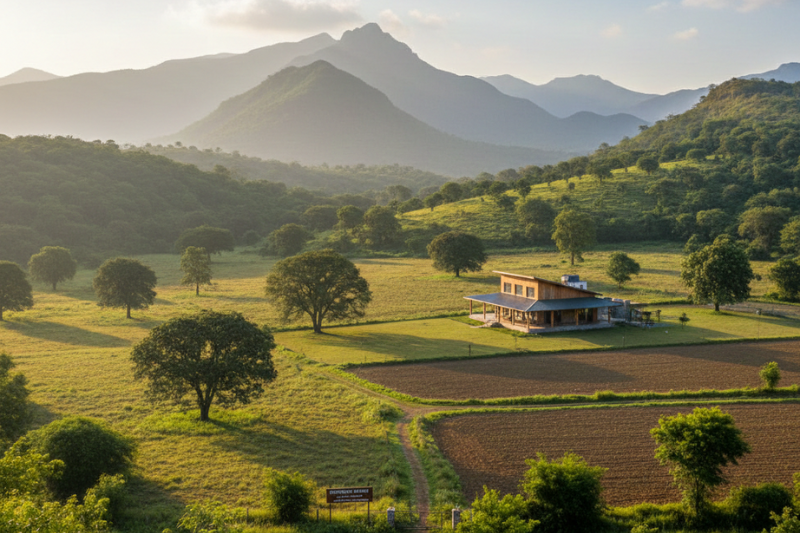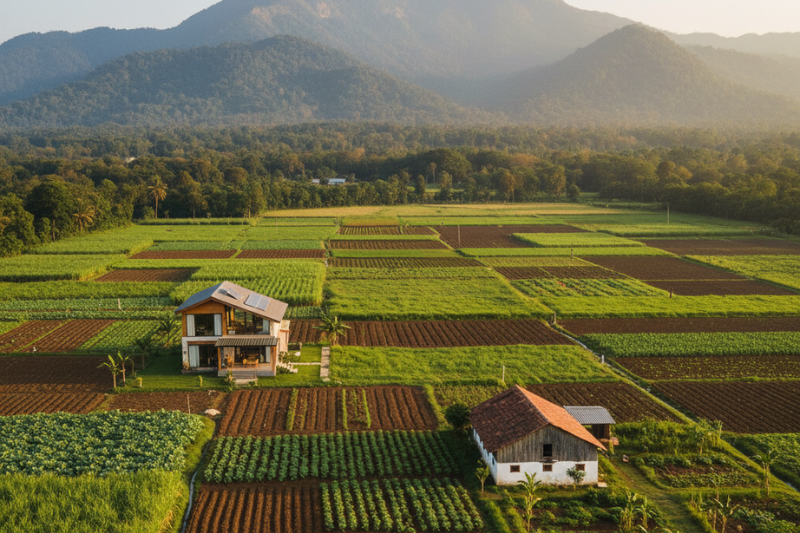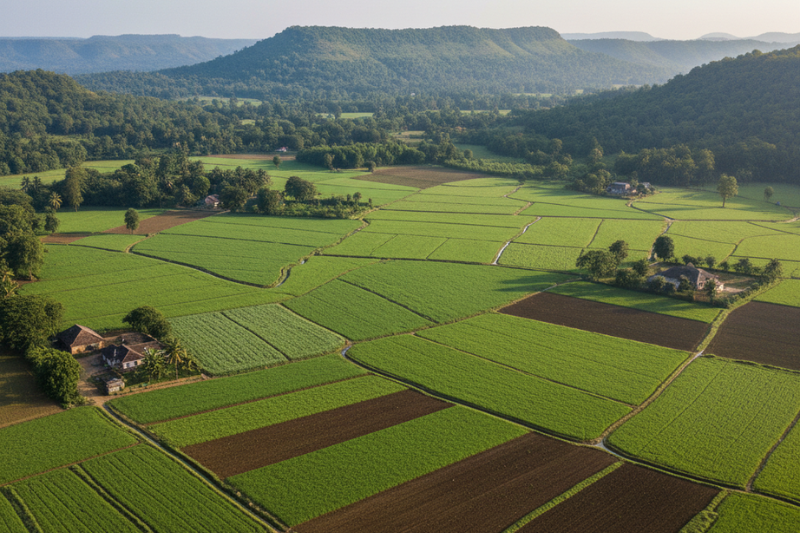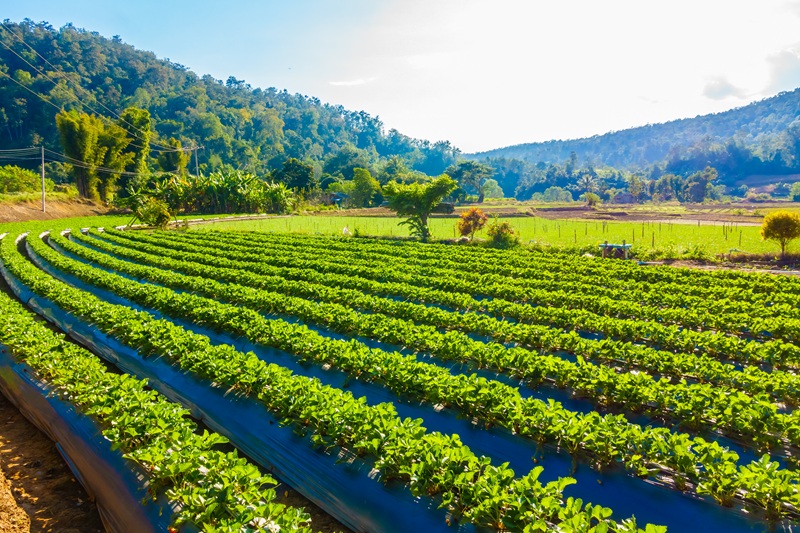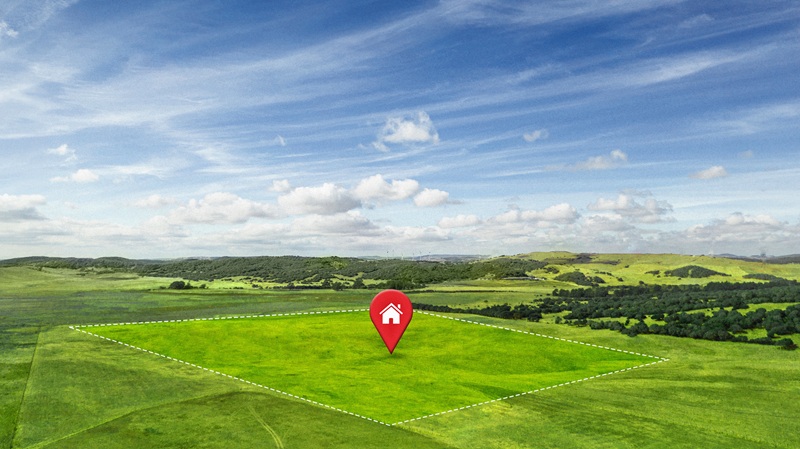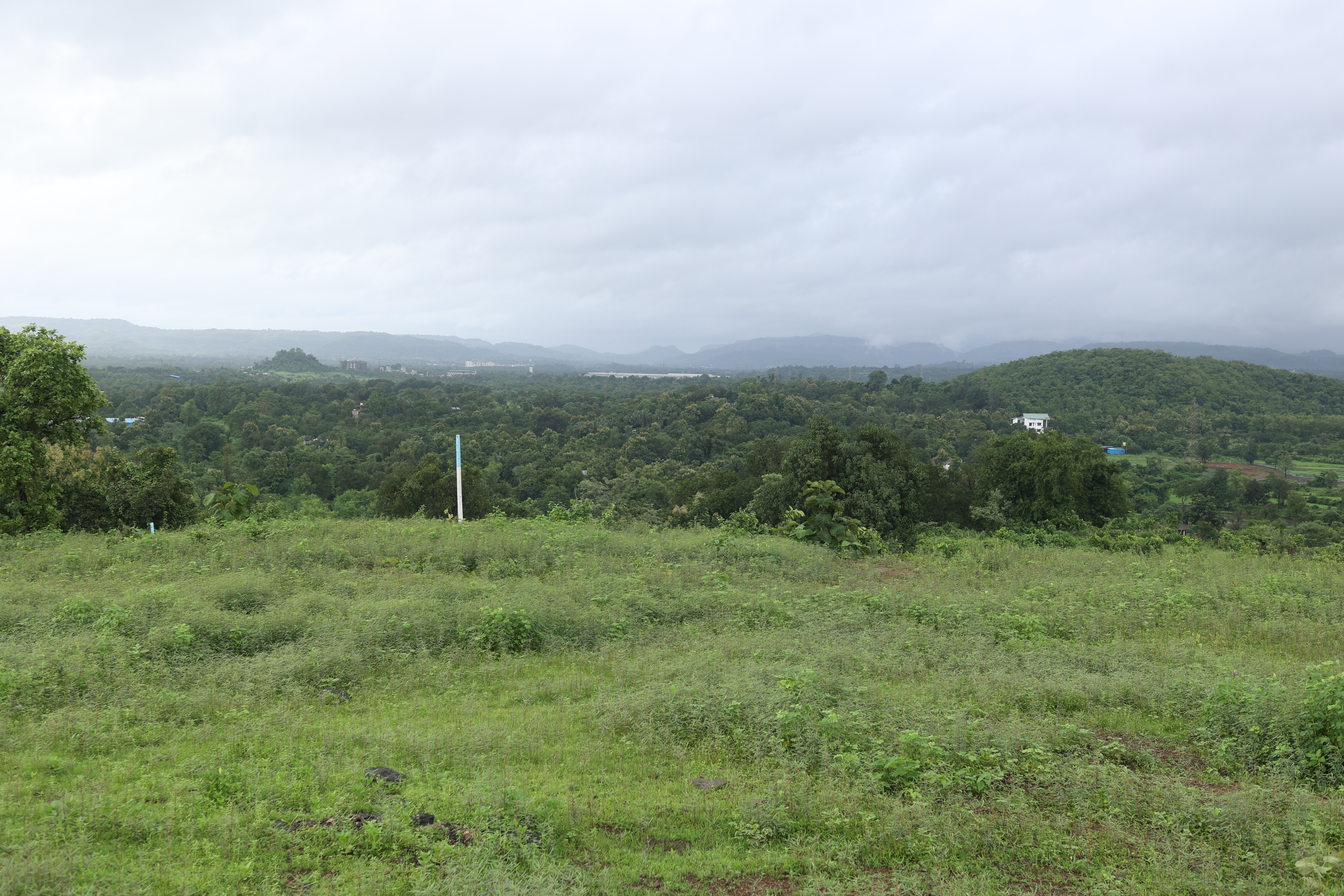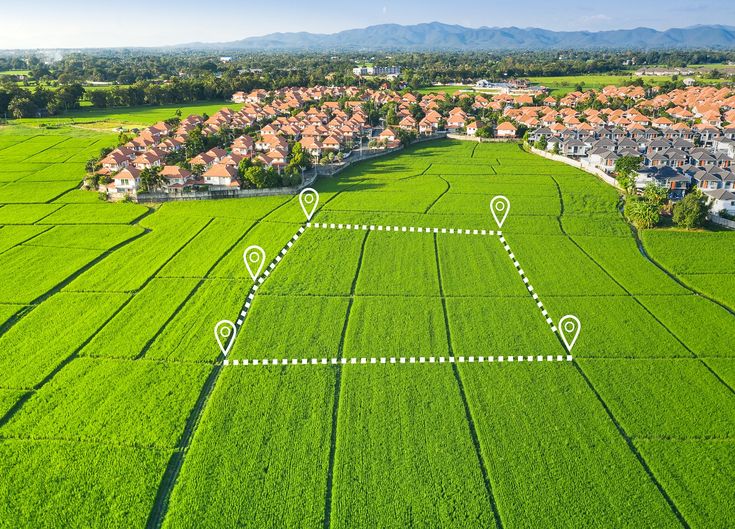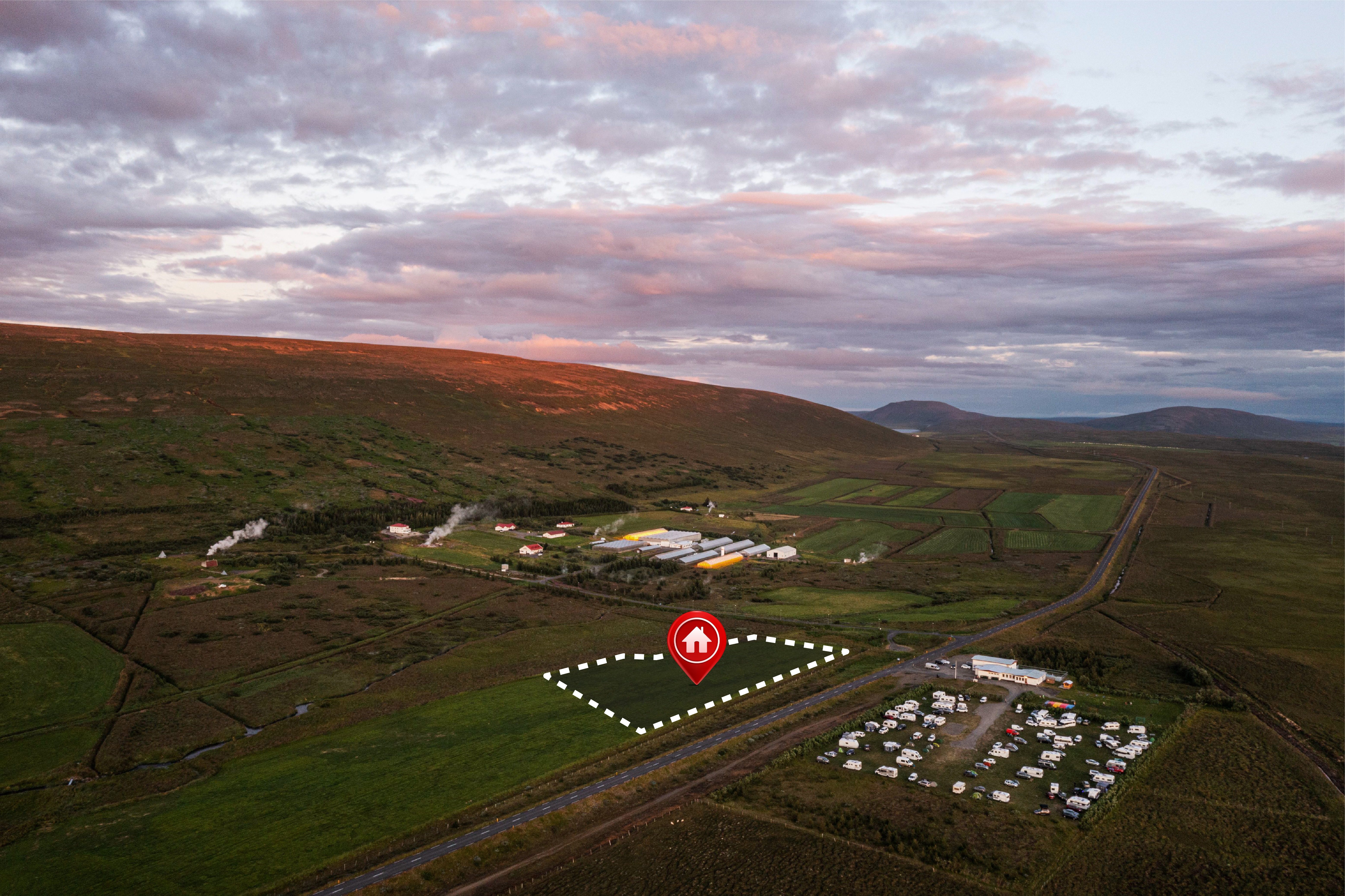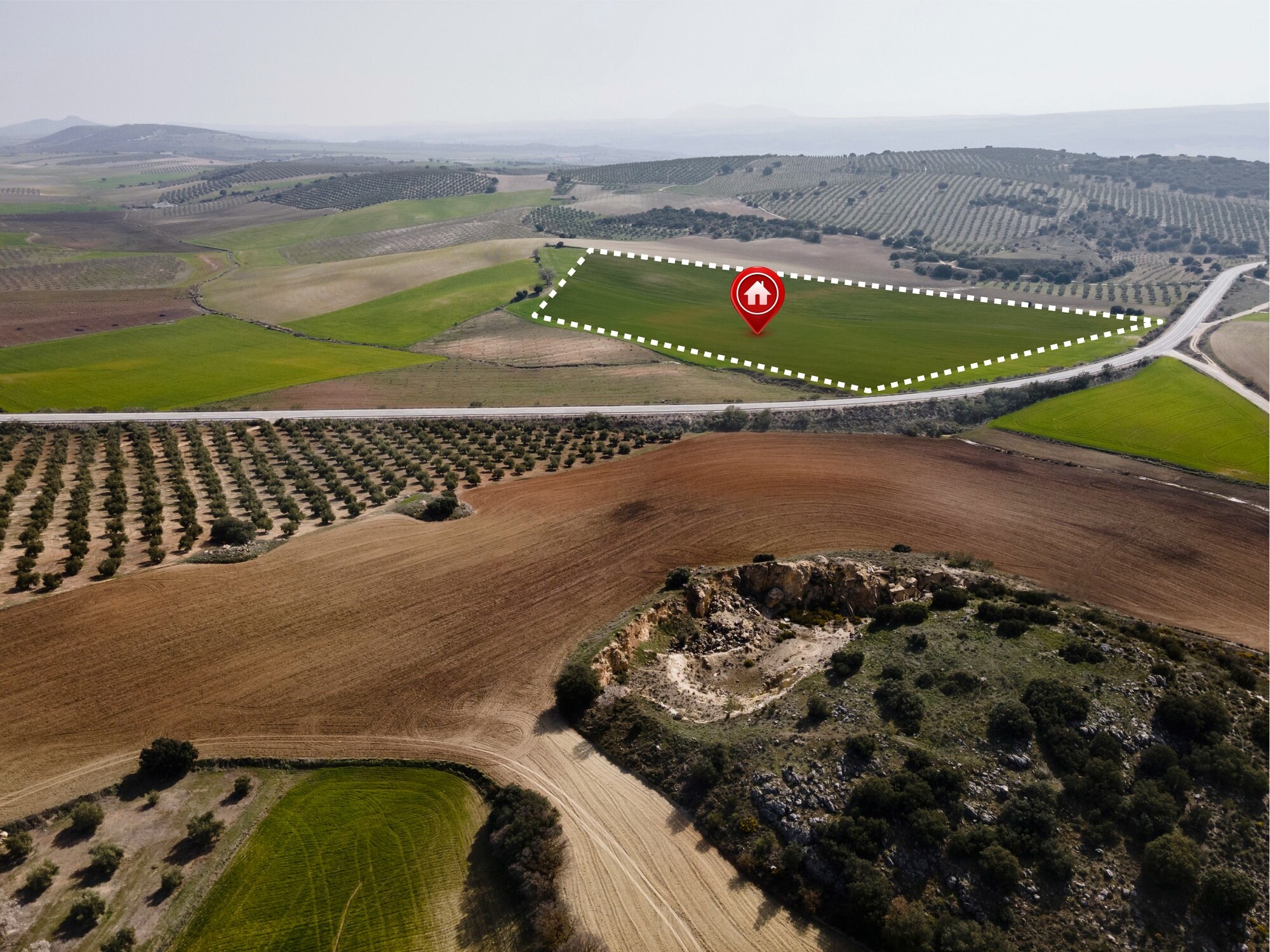



More urban investors are choosing to invest in agriculture land instead of, or alongside, stocks, fixed deposits, and apartments. The appeal is straightforward: land is a finite resource near growing cities, it carries no maintenance costs like a flat does, and it can serve a dual purpose as both a financial asset and a future personal retreat. This guide looks at why agricultural land has become a serious investment category, how its returns stack up against other options, the risks worth weighing, and where in the Mumbai-Pune corridor currently makes the most sense to buy.
Why More Investors Are Choosing to Invest in Agriculture Land
Three shifts are driving this trend. First, land near expanding metro regions tends to appreciate as infrastructure projects, like new expressways or industrial corridors, push development outward. Second, agricultural land typically has a lower entry cost per unit area than residential or commercial property in the same region, making it accessible to a wider range of investors. Third, unlike equity or mutual funds, land is a tangible asset that does not fluctuate daily, which appeals to investors who prefer to ride out long holding periods without watching a ticker. None of this guarantees returns, but it explains why the category has grown beyond traditional farming families into urban professionals and small investor groups.
How Agriculture Land Investment Near Mumbai Compares to Other Assets
Every asset class trades off liquidity, volatility, and effort. Here is a quick comparison for context:
- Equity and mutual funds: highly liquid, but values can swing sharply in the short term and require active monitoring
- Fixed deposits: predictable but low returns that often barely outpace inflation
- Residential apartments: steadier appreciation but higher entry cost, EMI burden, and ongoing maintenance
- Agriculture land investment near Mumbai: lower entry cost, no monthly upkeep, but lower liquidity and longer holding periods needed to realise gains
Land suits investors who can commit capital for five to ten years and are comfortable not needing to exit quickly, which is also why it works well as a complementary asset rather than a sole investment.
Understanding Returns on Agricultural Land Investment
Returns on agricultural land investment come from two sources: capital appreciation as the surrounding area develops, and, in some cases, income from leasing the land for cultivation while it appreciates. Appreciation is rarely linear, a plot near a newly announced expressway exit or tourism corridor can see a sharper price jump than one in a stagnant pocket. The most reliable way to estimate likely returns is to look at registered sale prices for nearby survey numbers over the past three to five years, available through the local sub-registrar's office, rather than relying on the asking prices quoted by sellers or brokers, which are often inflated.
Risks to Weigh Before You Invest in Agriculture Land
Land investment is not risk-free. Title disputes are the most common issue, particularly with older agricultural holdings that have passed through multiple generations without clean documentation. Liquidity is another factor, selling land can take months compared to exiting a mutual fund in a day. Zoning restrictions, conversion requirements for construction, and regulatory changes around agricultural land ownership also vary by state and can affect resale value or usability. None of these risks should discourage investment, but they do make legal due diligence and choosing an established seller far more important than chasing the lowest price per acre.
Where to Invest: Khopoli, Pali, and the Mumbai-Pune Corridor
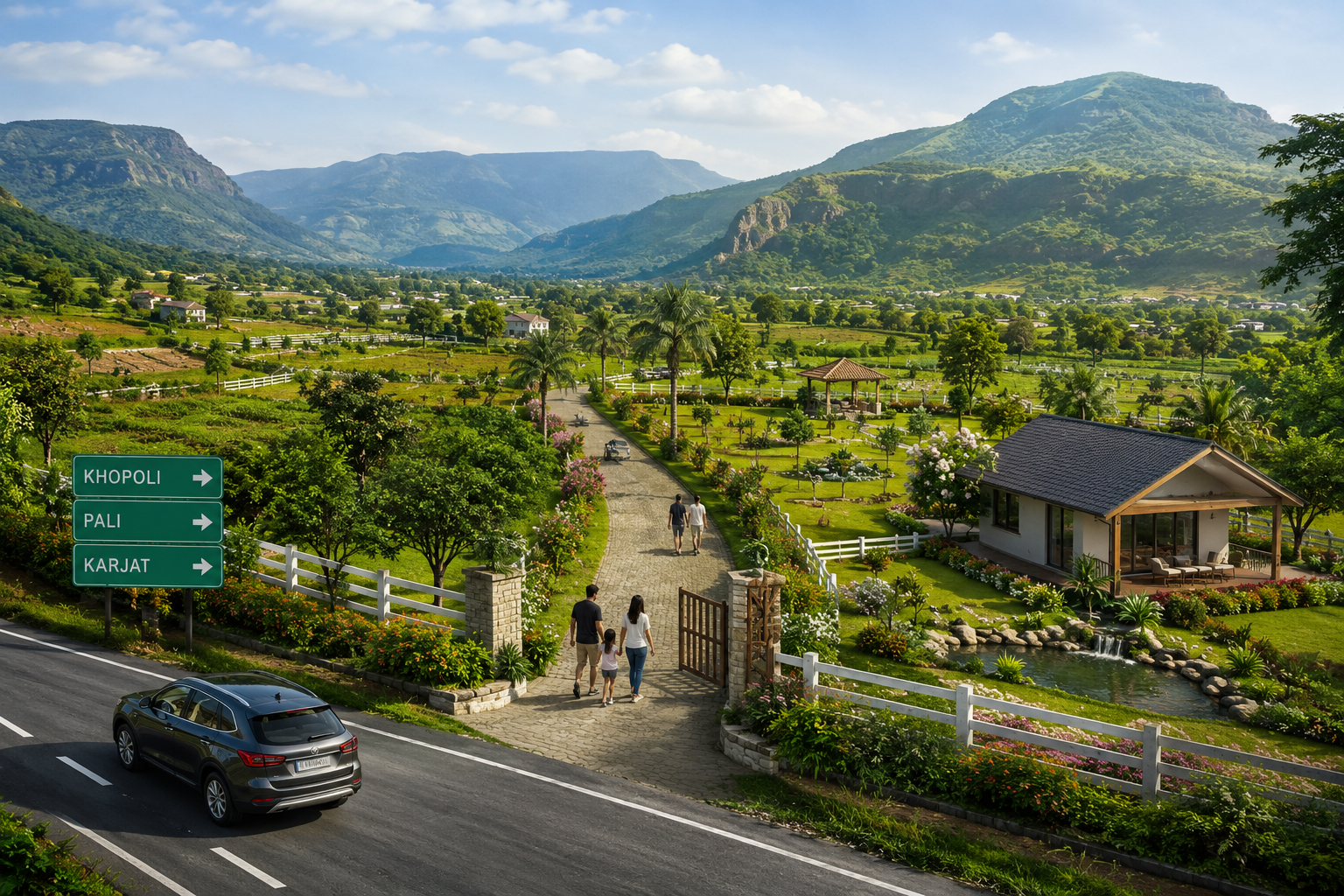
Within the broader Mumbai-Pune corridor, Khopoli and Pali stand out for investors looking to invest in agriculture land without paying Karjat-level premiums. Both areas benefit from expressway access, ongoing infrastructure upgrades, and a steady inflow of weekend-home buyers, which supports demand on the resale side as well. Pali in particular has seen larger gated agricultural projects emerge, offering investors the benefit of shared infrastructure like internal roads and security, which can make a plot easier to resell later compared to an isolated standalone parcel.
Grow Farms: A Track Record in Agriculture Land Investment Near Mumbai
Grow Farms has operated in the Khopoli-Pali belt for 15 years, with a team carrying 7 to 8 years of direct field experience handling title verification, conversion status, and handover for investors. Skybreez, their 114-acre project in Pali, combines landscaped gardens, water features, and a 5-acre resort zone, while Sarasview sits in a pocket that has already attracted secondary investor interest as the surrounding area develops. For anyone evaluating where to invest in agriculture land near Mumbai, Grow Farms' emphasis on verified titles and practical delivery, rather than speculative pricing, is consistently cited by clients as a reason for choosing them.
Frequently Asked Questions
Is it a good idea to invest in agriculture land right now?
It can be a sound long-term move, particularly in belts with active infrastructure development like Khopoli and Pali, provided the buyer completes proper title verification and is prepared to hold the asset for five years or longer.
What returns can I expect from agriculture land investment near Mumbai?
Returns vary by location and timing, but checking registered sale prices for nearby plots over the past three to five years gives a more realistic benchmark than asking prices. Proximity to expressways and approved development plans tends to accelerate appreciation.
Is agricultural land a better investment than a flat or mutual fund?
Neither is universally better. Land has a lower entry cost and no maintenance, but is less liquid than mutual funds and appreciates more slowly than a well-located flat in some markets. It works best as part of a diversified portfolio rather than a sole investment.
What are the biggest risks when investing in agricultural land?
Title disputes, low liquidity, and zoning or conversion restrictions are the main risks. These are largely manageable through proper legal due diligence and buying from an established, verifiable seller.
Which locations near Mumbai are best to invest in agriculture land?
Khopoli and Pali currently offer a strong balance of expressway connectivity and moderate pricing compared to Karjat, making them practical starting points for first-time agricultural land investors.
Ready to invest in agriculture land near Mumbai? Grow Farms offers verified plots and guided site visits across Khopoli, Pali, and Sarasview. Reach out at info@growfarms.co or call +91 8955441144 to plan your visit.